Gateshead Grammar School History
Way Back in Grammar School History in Gateshead
A free grammar-school was founded in Gateshead in 1701 by the Rev. Theophilus Pickering. It was called The Anchorage School and was based in St Mary's Church building
Besides Greek and Latin, the children of the 1700's were taught arithmetic and navigation.
Old Theophilus would have been proud of Capt. Hodge who, some of you'll remember, reintroduced navigation, in place of our actual O level maths syllabus.
For those who want more, the following is from a book of 1856 which may be read by clicking the link, taking you to a sister website www.gateshead-history.com
The Anchorage School.—This establishment is said to derive its name from the dues for anchorage in the Tyne having been originally appropriated to its support. It occupies apartments over the vestries of St. Mary's Church, and has an endowment of £12 per annum, bequeathed by Dr. Pickering, rector of Gateshead, in 1701. For this endowment the master teaches fifteen boys, at a reduced charge of one shilling a quarter, these boys being nominated by the rector of Gateshead for the time being. According to the deed of foundation, the boys are to be taught " the Latin and Greek tongues, as well as to write and cast up accounts, and the art of navigation or plain sailing." In addition to these, English grammar, geography, and mathematics, form a part of the course of instruction. The Rev. W. Bennett is the present master. (as of 1856)
More on The Anchorage
The School We Knew
The Gateshead Grammar School we knew was originally a private school called Gateshead High School For Boys which opened in 1883 at the junction of Durham Road and Prince Consort Road.
It was purchased by Gateshead School Board in 1894 and became a "Higher Grade School" called Gateshead Secondary School - this was coeducational. Publically owned Higher Grade Schools were a new breed of school, similar to the privately owned Grammar Schools but putting much more emphasis on science and art. The Head Master was John Bidgood described (in a book about Old Boy Arthur Holmes, the man who dated the World) as a "visionary",
"a teacher of biology and World expert on tropical orchids" who "made sure that provisions for the teaching of science were not exceeded by any other municipal school in the Country. It was, for example the first of those schools to have science laboratories specifically designed and fitted for that purpose" John Bidgood was a major player in the Higher Grade School movement at the tail end of the 19th and the beginning of the 20th Century. See The English Higher Grade Schools by Merial Vlaeminke...try Googling John Bidwood Higher Grade schools.
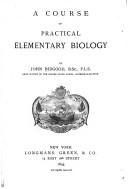

He was the author of this book A Course of Practical Elementary Biology and also Longman's Illustrated French Reading Book and Grammar published 1899
John Bidgood died aged 51 but his name was in front of us throughout our school lives in the form of the Bidgood Prize board which was in the old school and then moved to the new. The replacement head master was Mr Walton
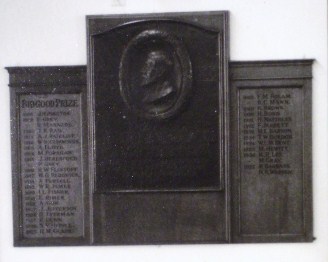
Bidgood Prize..it is difficult to read the dates of the prize winners...when did it start ...when did it end?
It was renamed Gateshead Grammar School after WW2, still coeducational, but it became boys only in 1956.
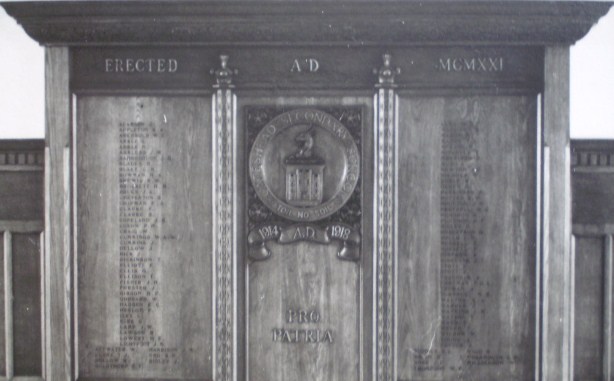
The WWI War Memorial erected (MCMXXI) 1921 calls the school Gateshead Secondary School
It was rebuilt on the same site in 1963, and in 1967 it became Saltwell Senior High School - a coeducational comprehensive school which lasted until the 1990s when it was closed and mostly demolished, and the youngsters were transferred to Kingsmeadows School at Dunston.
History per Tyne and Wear Archives
The origins of the School date back to March 1884. In that year, following calls to provide better education for children up to the ages of 14 and 15, the first Higher Grade School in Gateshead was established at Windmill Hills. The school was initially established in two houses in Freeman's Terrace. Almost immediately the school outgrew these buildings and moved to premises previously occupied by the Day Industrial School on Windmill Hills.
It was not long before those premises also proved inadequate and in 1891 the school moved to purpose built premises on Whitehall Road. In 1897 the Higher Grade School was divided and the senior section moved to premises at the corner of Durham Road and Prince Consort Road. These premises had previously belonged to a short-lived private school,Gateshead High School for Boys, which closed in 1894.(See below for the rest of its history) The Higher Grade School Junior section remained at Whitehall Road (see E.GA32 for the records of the Junior School). The new premises on Durham Road were soon extended. A science block was erected in 1900 and further extensions were added in 1908 and 1920. The school was known during these years as Gateshead Secondary School.
Following the 1944 Act the school became a Grammar School. It was attended by both boys and girls until the opening of the new Girls Grammar School in 1956 (see E.GA58 for the records of that school). Thereafter the school became known as Gateshead Grammar School for Boys and remained a single sex school until it was re-organised in 1968. By the late 1950s it was clear that the old buildings were no longer adequate and so new premises were erected on Avenue Road,Gateshead. These were officially opened on 25 April 1964. The old premises were demolished to provide space for tennis courts.
Following re-organisation in 1968, the school became a co-educational comprehensive, under the name Saltwell Senior High School. The school closed in 1990.
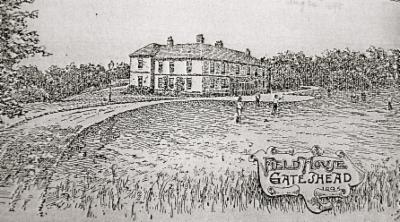
The private Gateshead High School for Boys didn't cease after their building was sold to the Local Authority. They moved here, Field House which they leased from the family of R. S Newall LLD*., under the headmastership of G.S.Smart M.A. Cambridge. Here to see old boys of that school
* Robert Stirling Newall 1821-1889, engineer, and his wife, Mary, daughter of Hugh Lee Pattinson FRS (1796–1858), metallurgical chemist and astronomer owner of The Felling Chemical Works
Here's Field House in relation to Gateshead Grammar School building
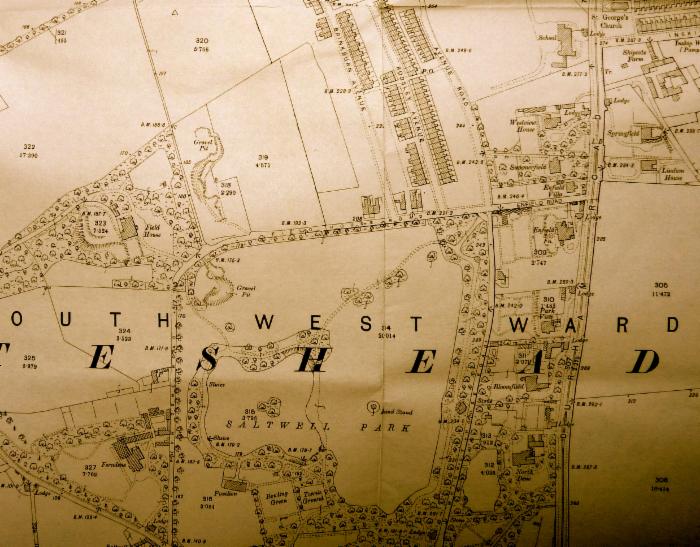
Field House mid upper left of map, GGS high upper right. When we left GGS on a run round Saltwell Park lake we were virtually just over the fence from Field House when we were far enough away from the gym teacher to have a sly fag